Last Updated: March 2026 | Disclaimer: Vaping laws change rapidly. This article is for informational purposes only and does not constitute legal advice. Always verify current regulations in your jurisdiction before purchasing or using any vaping product.
If you’ve been watching the vape industry over the past few years, you already know the regulatory landscape has gotten increasingly complicated. Flavor bans, nicotine restrictions, disposable bans — it can feel like every other month there’s a new law threatening your ability to vape legally. But here’s a question that’s been coming up more and more: Is Nixodine legal?
The short answer is: in most places, yes — and in a lot of states where traditional nicotine vapes are heavily restricted, Nixodine occupies a completely different legal category. Let’s break it down.
What Is Nixodine, Exactly?
Before we can talk about legality, we need to understand what Nixodine actually is — because that’s the whole key to this conversation.
Nixodine (specifically Nixodine-S) is a patented compound developed by Bonguard Naturals. It is not nicotine. It is not derived from tobacco. It contains zero tobacco-derived ingredients. Nixodine-S is a synthetic, non-nicotine compound that is classified as a flavoring ingredient — not a tobacco product or a nicotine product — under FDA definitions.
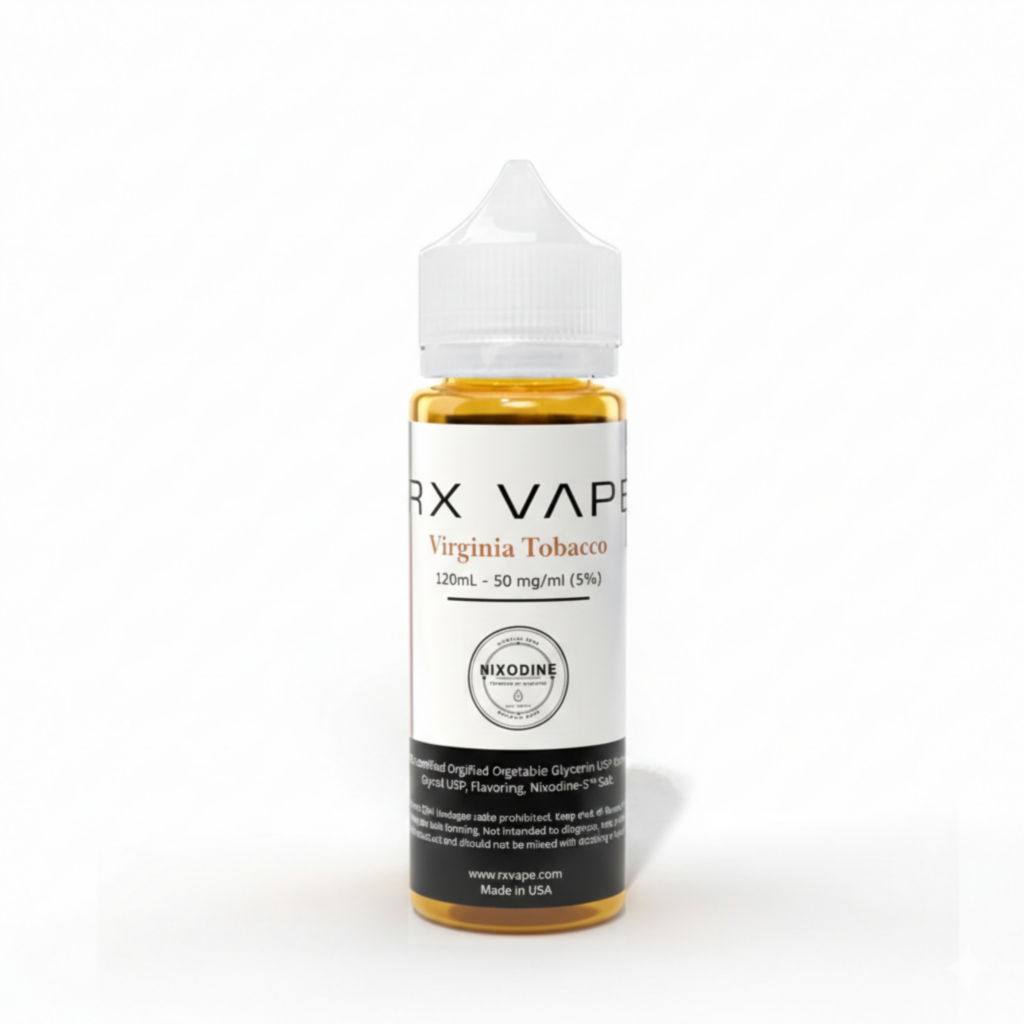
RxVape’s Nixodine Virginia Tobacco e-liquid is built around this ingredient. It’s a nicotine-free vape juice that uses Nixodine-S along with food-grade flavoring to create a vaping experience — without any of the regulatory baggage that comes with nicotine or tobacco-derived products.
For a deeper dive into what Nixodine is and how it works, check out our Complete Guide to Nixodine and Synthetic Nicotine Alternatives.
Federal Legal Status of Nixodine
At the federal level, the FDA regulates “tobacco products” — which include cigarettes, smokeless tobacco, hookah tobacco, cigars, pipe tobacco, nicotine gels, and e-cigarettes/vapes that contain nicotine or tobacco-derived ingredients.
The critical statutory definition comes from the Family Smoking Prevention and Tobacco Control Act (TCA): a tobacco product is any product “made or derived from tobacco” or containing nicotine “from any source.” In 2022, the FDA extended its jurisdiction to cover synthetic nicotine products — but that expansion specifically targeted nicotine, not all vaping products broadly.
Because Nixodine-S is neither nicotine nor derived from tobacco, e-liquids made with it do not fall under FDA tobacco product jurisdiction under current federal rules. They’re treated more like a flavored food-grade liquid than a regulated tobacco product.
This is a significant distinction. It means Nixodine products are not subject to the FDA’s Premarket Tobacco Application (PMTA) process that has forced thousands of vape products off the market. It also means they’re not subject to the federal prohibition on flavored cartridge-based e-cigarettes (which only applies to “tobacco products” as defined by the TCA).
Federal bottom line: Nixodine-based e-liquids are not classified as tobacco products under current federal law.
State-by-State Analysis: Where Does Nixodine Stand?
State vaping laws vary enormously. Some states have sweeping bans on flavored tobacco products; others have targeted nicotine-specifically. Here’s how Nixodine fits into the most restrictive vaping states in the country.
Massachusetts — One of the Strictest in the Nation
Massachusetts bans the sale of all flavored tobacco products, including flavored e-cigarettes and vaping products. The ban covers products that are “tobacco products” as defined under Massachusetts law — which mirrors the FDA’s framework in requiring nicotine or tobacco derivation.
Because Nixodine-S is not nicotine and not derived from tobacco, Nixodine e-liquid doesn’t meet the definition of a “tobacco product” under Massachusetts law. Nixodine Virginia Tobacco may be legally available in Massachusetts — though we strongly recommend consulting Massachusetts DPH guidance or legal counsel before purchasing if you’re in MA.
New York — Flavor Bans and Age Restrictions
New York enacted a comprehensive flavored e-cigarette ban in 2020 and has continued expanding vaping restrictions. NY’s laws target flavored “electronic cigarettes” — which are defined by reference to tobacco product definitions requiring nicotine content or tobacco derivation.
Nixodine e-liquid, containing no nicotine and no tobacco-derived ingredients, falls outside the standard NY electronic cigarette definition. Nixodine products appear to be legal for sale and use in New York under current law — but New York’s regulatory environment is aggressive and evolving, so stay alert.
New Jersey — Flavor Ban in Effect
New Jersey banned flavored e-cigarettes and vapor products in 2020. Like other state laws, NJ’s definition of regulated vapor products centers on nicotine content. Products without nicotine — including those using non-nicotine alternatives like Nixodine-S — are not squarely covered by these definitions.
Nixodine appears to be legal in New Jersey under current state vaping law, though we always recommend checking with a local attorney or reviewing NJ DOH guidance directly.
California — Multiple Overlapping Regulations
California has some of the most layered vaping regulations in the country. Proposition 31 (2022) upheld California’s statewide ban on flavored tobacco products. Additionally, local jurisdictions like San Francisco have their own flavor bans. California defines “tobacco products” using the standard framework — requiring nicotine or tobacco derivation.
Under California’s STAKE Act and related laws, the key trigger is whether a product is a “tobacco product.” Since Nixodine doesn’t contain nicotine or tobacco-derived ingredients, Nixodine e-liquid should not be covered by California’s flavored tobacco product bans. However, California’s regulatory appetite is expansive, and we’d recommend checking current CDTFA and CDPH guidance.
Rhode Island
Rhode Island bans flavored e-cigarettes statewide. Its definitions follow the nicotine/tobacco derivation framework. Nixodine’s non-nicotine, non-tobacco status means it likely falls outside Rhode Island’s flavor ban.
Washington State
Washington has enacted vapor product regulations and flavor restrictions. Washington’s vapor product definition requires a product to be “intended for human consumption” via inhalation and to contain nicotine. Products without nicotine, like Nixodine e-liquid, likely fall outside Washington’s vapor product regulatory framework.
Hawaii
Hawaii has banned flavored tobacco products and has additional age restrictions on vaping. Like other states, Hawaii’s tobacco product definitions require nicotine or tobacco derivation. Nixodine should be outside Hawaii’s tobacco product bans under current law.
Colorado, Illinois, and Other States with Pending Flavor Restrictions
Many states are actively considering or have recently passed partial flavor bans. In virtually every case, these laws are written to cover “tobacco products” as defined by nicotine content or tobacco derivation. States pushing new restrictions include Colorado, Illinois, Minnesota, and others.
The pattern holds: as long as Nixodine remains classified as a non-nicotine, non-tobacco product, it should remain outside the scope of these state tobacco bans. But the legal landscape shifts quickly — see our breakdown of the Disposable Vape Ban 2026 to understand how fast these changes can hit.
States With No Flavor Bans (Most of the Country)
The majority of U.S. states — including Texas, Florida, Tennessee, Georgia, Arizona, Ohio, and many others — do not have statewide flavored vape bans. In these states, Nixodine e-liquid is clearly legal, just like any other nicotine-free flavored e-liquid.
How Nixodine Sidesteps Tobacco Classification
Let’s be precise about why Nixodine sits in a different legal category than traditional vapes:
- No nicotine: Federal and state vaping laws almost universally require nicotine content (from any source) as a threshold for regulation as a tobacco product.
- No tobacco-derived ingredients: Nixodine-S is a synthetic compound — it’s not extracted from tobacco plants, and no part of the tobacco plant is used in its production.
- Food-grade classification: The ingredients in Nixodine e-liquid are classified as flavoring compounds, not tobacco or drug products.
- Not subject to PMTA: Because it’s not a tobacco product, RxVape’s Nixodine e-liquid doesn’t require FDA premarket review under the tobacco framework.
This is the same structural reason why certain zero-nicotine vape juices have been able to operate in restricted markets — but Nixodine takes it further with a patented active ingredient that’s explicitly designed around this regulatory gap.
Curious whether Nixodine affects drug testing? We’ve covered that separately: Does Nixodine Show Up on a Drug Test?
What to Watch Out For: Evolving Regulations
Here’s the honest reality: the regulatory environment for vaping is volatile. Laws that didn’t cover non-nicotine products in 2024 could be amended in 2026 or 2027 to explicitly include them. Some states may pass broader “inhalable product” regulations that don’t require nicotine as a trigger.
We’ve already seen regulators respond to synthetic nicotine by rapidly updating federal law in 2022. It’s reasonable to expect that if non-nicotine vaping alternatives gain significant market share, regulators may take notice.
For now, Nixodine occupies a legally distinct category. But this is a dynamic space. Always check your local and state laws before purchasing.
Frequently Asked Questions
Is Nixodine legal in my state?
In most states, yes. Because Nixodine contains no nicotine and no tobacco-derived ingredients, it falls outside standard tobacco product definitions used in most state flavor bans and vaping regulations. However, laws vary and change — check your state’s specific statutes or consult a local attorney.
Does Nixodine require FDA approval?
Nixodine-based e-liquids are not classified as tobacco products under current FDA definitions, so they don’t require the same PMTA process that nicotine-containing vapes do. The ingredients are classified as flavoring compounds.
Can I buy Nixodine if I live in Massachusetts or California?
Based on current law, Nixodine products appear to fall outside the definitions used in MA and CA flavored tobacco product bans. However, these states are regulatory leaders and their laws evolve frequently. We recommend verifying current rules before ordering.
Is Nixodine the same as synthetic nicotine?
No. Synthetic nicotine is still nicotine — it’s just manufactured without using tobacco plants. The FDA explicitly brought synthetic nicotine under its jurisdiction in 2022. Nixodine-S is a completely different compound that is not nicotine in any form.
The Bottom Line
Is Nixodine legal? Under current federal law and the vaping regulations of most states — including many of the most heavily-restricted states like Massachusetts, New York, New Jersey, and California — Nixodine-based e-liquids appear to fall outside the scope of tobacco product bans because they contain no nicotine and no tobacco-derived ingredients.
This makes Nixodine one of the more interesting products in the current vaping market: a vaping option that may remain accessible in markets where traditional nicotine vapes have been severely restricted or banned entirely.
That said, the legal landscape changes fast. Always check your local laws, and don’t take any single article — including this one — as your final word on what’s legal in your area.
🛒 Try Nixodine Virginia Tobacco Today
RxVape’s Nixodine Virginia Tobacco is available in two formulas:
- 🧪 Nixodine Virginia Tobacco — Nic Salt Formula — Smooth draw, satisfying vape experience
- 🌬️ Nixodine Virginia Tobacco — Freebase E-Liquid — Classic freebase for sub-ohm tanks and dripper setups
Use code TRYNIXODINE at checkout for 20% off your first order.
Legal Disclaimer: This article is provided for informational purposes only and does not constitute legal advice. Vaping laws and regulations change frequently at the federal, state, and local level. RxVape makes no representation that Nixodine products are legal in every jurisdiction. Consumers are solely responsible for verifying the legality of any product in their location before purchasing or using it. Always consult applicable laws and, when in doubt, seek qualified legal counsel.